
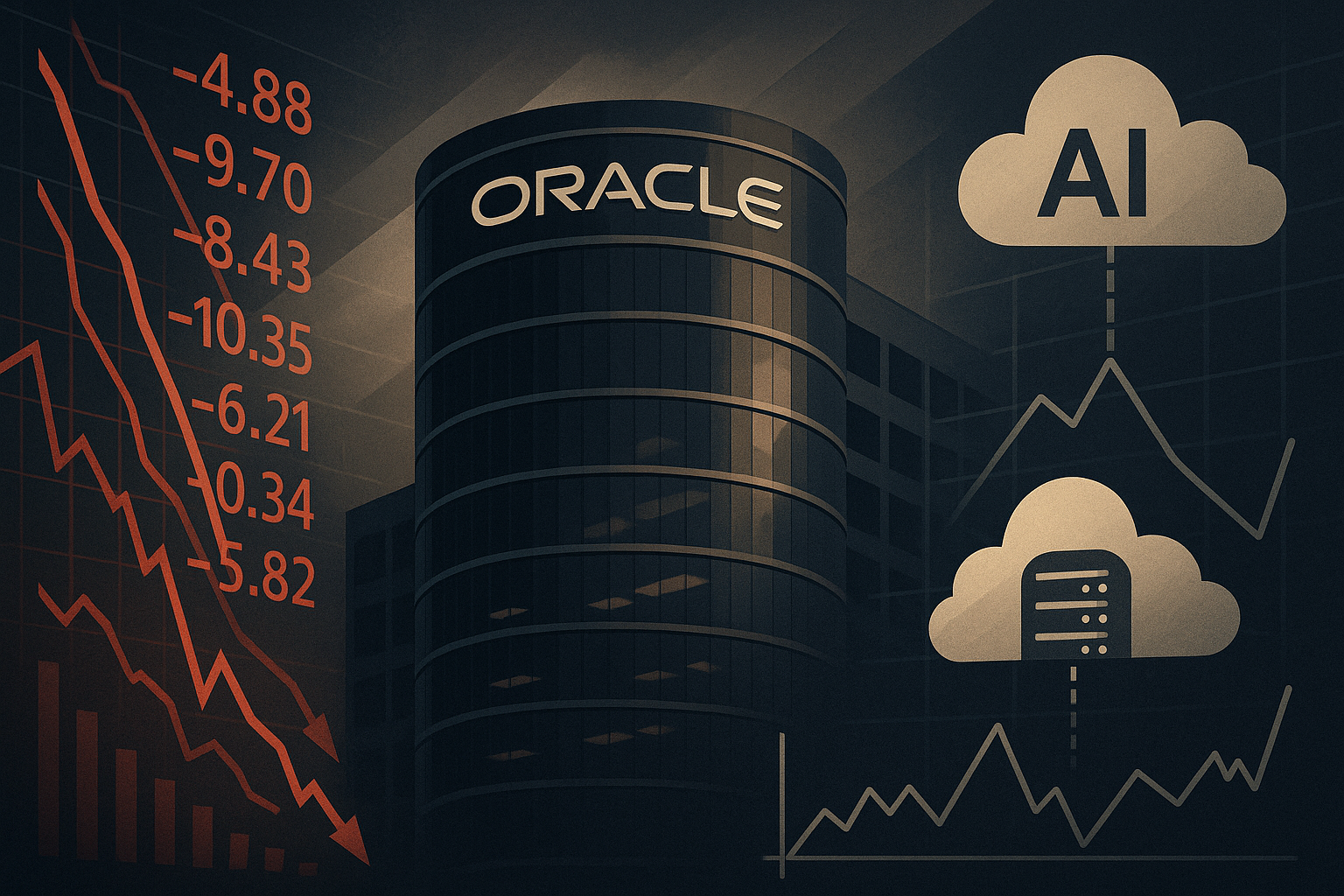
Oracle Corp. heads into its fiscal second-quarter earnings report facing mounting scrutiny from investors, who have grown increasingly uneasy about the software giant’s rising leverage, heavy capital expenditures, and concentrated exposure to artificial intelligence demand.
The mood marks a sharp reversal from three months ago, when optimism around Oracle’s cloud pipeline drove the stock to its strongest single-day performance in three decades.
Stock slide follows initial AI-driven surge
Shares of Oracle have tumbled 33% since September 10, when enthusiasm around rapid cloud infrastructure growth propelled the company to an all-time high.
The rally was sparked largely by a surge of more than $300 billion in backlog — a figure later revealed to be driven primarily by a single massive contract with OpenAI.
The market reaction swiftly unwound as investors questioned the sustainability of that booking, given OpenAI’s losses and uncertain fundraising prospects.
The selloff places Oracle near the bottom of this year’s megacap tech performers and has intensified investor concerns about the broader AI trade.
Although options traders anticipate a sharp post-earnings move — pricing in a 10% swing in either direction — the stock’s valuation remains somewhat elevated, trading at roughly 30 times forward earnings, well above its 10-year average of 17.
Capital spending and leverage in focus
Oracle’s rapid expansion into cloud infrastructure has transformed the company’s financial profile.
Once known for high-margin legacy software, Oracle is now in the midst of a multiyear data center buildout driven partly by its cloud deal with OpenAI and the broader Project Stargate initiative.
Capital expenditures are projected to reach $8.2 billion for the quarter, more than double last year’s level.
Free cash flow is expected to land at negative $5.9 billion, down sharply from a $2.7 billion surplus a year earlier.
This shift has placed significant strain on Oracle’s balance sheet.
The company added $18 billion in debt this year, and credit markets have taken notice.
The cost of insuring Oracle’s debt against default rose to its highest point since 2009 last week, reflecting heightened unease over its financing needs.
Some analysts warn that even a strong earnings report may be overshadowed by questions about how Oracle plans to fund continued cloud expansion.
Cloud momentum meets investor caution
Despite these pressures, analysts expect Oracle to deliver solid second-quarter results.
Wall Street projects an 11% increase in adjusted earnings and 15% revenue growth.
The company’s remaining performance obligations are forecast to reach roughly $520 billion — a more than 400% year-over-year jump — and continue rising into the next quarter.
Cloud infrastructure remains the key driver, with revenue up 55% in the prior quarter.
Still, investors want more clarity on revenue diversification and margin trajectory.
Oracle executives are likely to face pointed questions about the durability of the OpenAI relationship, the pacing of new customer wins, and plans to secure external financing to ease the capital burden.
With Oracle’s stock down sharply but stabilizing in December, the upcoming earnings call offers management a chance to reshape the narrative.
But for now, many investors remain cautious.
Oracle stock was up 0.89% in premarket trading on Wednesday.
The post What to expect from Oracle’s Q2 results? appeared first on Invezz
