
By Beatriz Marie D. Cruz, Reporter
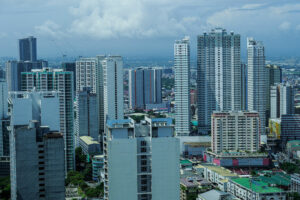
UNSOLD condominium units in Metro Manila could take about two to three years to be fully absorbed, particularly in areas previously occupied by Philippine offshore gaming operators (POGOs), property consultancy Leechiu Property Consultants (LPC) said.
“I think it will still take about two years, probably three years, to clear out the POGO-induced supply, especially in central business districts where there was heavy POGO presence,” Roy Amado L. Golez, Jr., LPC director for research, consultancy, and valuation, told a media briefing on Wednesday.
As of end-November 2025, Metro Manila’s middle-income condominium inventory rose to 80,300 units across 578 actively selling buildings, up from 74,600 units in the previous quarter. This represents roughly three years and six months of available supply.
Of the total, 53,900 units are pre-selling, while 26,400 are ready-for-occupancy. Quezon City recorded the highest number of unsold condominiums at 19,300 units, followed by the Ortigas area and the cities of Mandaluyong, Pasig, and San Juan with 14,200 units, and the Bay Area with 13,000 units.
Metro Manila continues to grapple with an oversupply of units in the upper middle income to upscale segments, typically priced between P4 million and P12 million, particularly in areas affected by last year’s government POGO ban.
“Fewer speculative buyers dampen primary take-up, while motivated sellers from the POGO period compete in the secondary market with aggressive pricing, further slowing absorption,” LPC said.
Residential demand in the first 11 months of 2025 fell to a six-year low of 24,732 units, down from 42,563 units sold in the same period of 2020. Year on year, units sold declined by 3% from 25,565 units in the first 11 months of 2024.
“But then, there’s still one more month to go, so hopefully developers can sweep all the potential sales and catch up,” Mr. Golez said.
New condominium launches as of end-November dropped by 60% to 5,256 units from 13,226 units a year ago, marking the lowest level since 29,739 units launched in 2020.
“We have a market here where developers are conscious of inventory and are also experiencing low sales. At the same time, reservation sales and actual sales have been flattening or tapering off,” Mr. Golez said.
“The issue in the last few years is that price increases have been too aggressive for many developers,” he added.
Despite the high inventory of unsold units, the Philippines continues to face a growing housing backlog, Mr. Golez noted.
In the office sector, global capability centers (GCCs) — firms specializing in healthcare, finance, and other services — are expected to drive tenant demand in 2026.
“As we enter next year, there is a high probability that tenants will continue to require spaces of 5,000 to 10,000 square meters (sq.m.), especially among global capability centers,” LPC Director for Commercial Leasing Mikko Barranda said.
Year-to-date, office leasing demand in Metro Manila grew 10% to 1.22 million sq.m. from 1.11 million sq.m. during the same period in 2024. The information technology-business process management sector accounted for 549,000 sq.m., followed by traditional firms at 563,000 sq.m., global capability centers at 174,000 sq.m., and government tenants at 74,000 sq.m.
Vacated office space in the fourth quarter fell 59% to 85,000 sq.m. from 205,000 sq.m. in the previous quarter. Year-to-date, LPC recorded 744,000 sq.m. of vacated space.
“As tenants realize that certain districts have a very tight market for certain space sizes, we will likely see spillover activity into other districts,” Mr. Barranda said.
At present, Metro Manila has an office vacancy of 18%, with Bonifacio Global City still the most favored location with a 9% vacancy rate, followed by Makati City at 15%.
