
The construction of a nuclear power plant in Labrador, Pangasinan could make the municipality the richest town in the Philippines, a local lawmaker said.
“Can you imagine if not only 1,000 megawatts of nuclear (power) is built in Labrador, but maybe 4,000 or even 6,000 megawatts? I think Labrador will become the richest town in the entire Philippines,” Marcos Juan Bruno O. Cojuangco, 2nd District of Pangasinan representative, said during the Atomic Energy Week on Tuesday.
Mr. Cojuangco said this is possible because, for every 1,000 megawatts installed, a nuclear plant can generate enough power to supply Labrador with twice its total 2021 electricity consumption every year across the facility’s 80-year lifespan.
He added that such a facility could significantly reduce generation charges, leading to lower electricity rates that may help attract investments.
“I think foreign investors and local investors will flock to Labrador to set up their businesses and industries, and it will enable us to create the thousands of jobs necessary to uplift the lives of Labradorans,” Mr. Cojuangco said.
Last year, Mr. Cojuangco, a staunch advocate of nuclear energy, proposed the construction of a 1,000-megawatt nuclear power plant in Pangasinan.
The plant’s cost is estimated to be at least P225 billion and will possibly be built within a 120-hectare area.
In previous statements, the lawmaker said electricity from nuclear power could drop to as low as P5 per kilowatt-hour or even provided free to residents of Labrador under certain arrangements.
The municipality has a population of 26,811 based on the 2020 census.
Mr. Cojuangco also said the income tax generated from the nuclear plant could help lift Labrador out of poverty, similar to the nearby town of Sual, which saw revenue gains from hosting a 1,000-MW coal power plant.
Labrador is currently the second-poorest municipality in Pangasinan, he said.
Meanwhile, the Archdiocese of Lingayen-Dagupan voiced opposition to the proposed nuclear plant last weekend, citing that its planned location is near the East Zambales Fault Line, making any nuclear project “an unacceptable risk.”
“Not in Pangasinan! Not anywhere else!” the bishops said in a statement. They also recalled the 2011 Fukushima disaster, which caused significant harm to both lives and the environment.
Mr. Cojuangco stressed that the proposed plant will not be built on top of a fault line and would be engineered to withstand the maximum possible earthquake intensity that the fault could generate.
Amid opposition to nuclear energy, he urged the Philippine Nuclear Research Institute (PNRI) to promote a more positive narrative about its benefits.
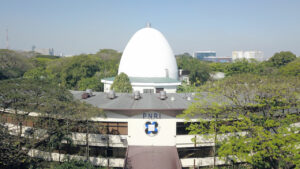
PNRI is the country’s primary research and technical agency for nuclear science and technology, responsible for conducting research, providing scientific expertise, and training personnel in the safe and peaceful use of nuclear energy.
Meanwhile, the newly created Philippine Atomic Energy Regulatory Authority (PhilATOM) under the recently enacted RA 12305, serves as the independent regulator, overseeing licensing, inspections, and enforcement of nuclear and radiation safety, with PNRI providing technical guidance and support.
The law also includes measures such as the establishment of a national registry for radiation sources, stricter safety protocols, and penalties for unauthorized nuclear activities.
PNRI is leading this year’s Atomic Energy Week from December 9 to 12, highlighting the importance of nuclear science and technology in national development. One of the event’s centerpieces is the open-house technical exhibits, showcasing recent nuclear technologies developed by Filipino scientists and researchers. — Edg Adrian A. Eva
